Leo Diaz
Dec 31, 2025
★★★★★
5
Surprisingly good. Better than a lot of Essays & Criticism titles I've tried free elsewhere. Read on iPad.
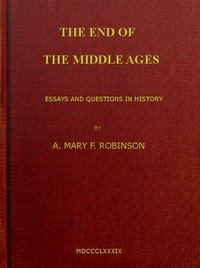
by Robinson, A. Mary F. (Agnes Mary Frances)
Experience one of the most influential works of modern historiography with A. Mary F. Robinson's The End of the Middle Ages. As a definitive collection of essays and questions, this volume traces the profound transformations that defined the transition from medieval to early modern Europe, examining the cultural, political, and intellectual shifts that reshaped the Western world. Robinson's masterful analysis makes complex historical processes accessible and engaging for both students and serious history enthusiasts. Whether you are studying medieval history, early modern Europe, or the evolution of Western civilization, this book is an essential resource. The EPUB format ensures a readable experience on any device, making it a convenient addition to your digital library. Discover why Robinson's work remains a cornerstone of historical scholarship and explore the fascinating end of the Middle Ages for yourself.
Müller, F. Max (Friedrich Max)
Lowell, James Russell
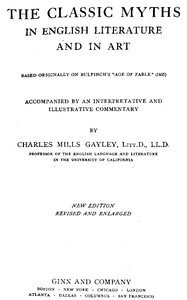
Bulfinch, Thomas, Gayley, Charles Mills
Eliot, T. S. (Thomas Stearns)
Arnold, Matthew
![Definitions: Essays in Contemporary Criticism [First Series]](/static/covers/054bff4347214b379fc96444848faece.jpg)
Canby, Henry Seidel
Surprisingly good. Better than a lot of Essays & Criticism titles I've tried free elsewhere. Read on iPad.
Absolutely loved The End of the Middle Ages: Essays and Questions in History. Finished it in two sittings — Robinson, A. Mary F. (Agnes Mary Frances) writes so clearly. Star rating reflects the content, not the store.